Your AI Team Doesn’t Need More Tools. It Needs Shared Memory.
Your AI Team Doesn’t Need More Tools. It Needs Shared Memory AI teams aren't losing productivity because they lack enough apps, models, or clever prompts. They lose it because their work state is scattered across tools...
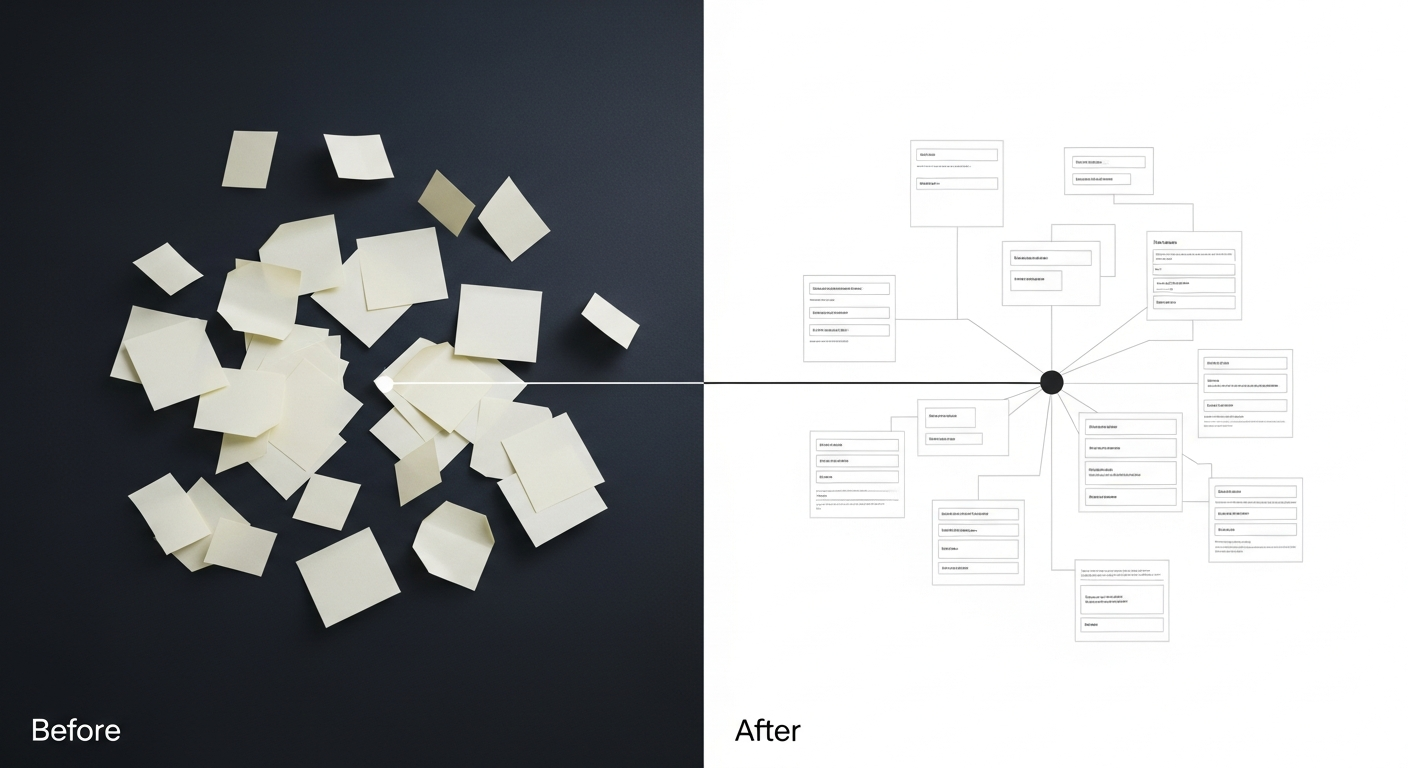
AI teams aren't losing productivity because they lack enough apps, models, or clever prompts. They lose it because their work state is scattered across tools that cannot remember each other. A founder asks an AI model for product strategy, but customer calls are in one place, roadmap notes in another, code decisions somewhere else, and the real reasoning buried in Slack. The result isn't “AI transformation.” It’s re-prompting, copy-pasting, and explaining the same business over and over. The next durable advantage will belong to teams with shared AI memory: a layer that preserves context across chats, docs, code, and decisions.
The Silent Saboteur: How Fragmented Context Taxes AI Workflows
The modern AI team has access to extraordinary capabilities. It can brainstorm positioning in ChatGPT, compare technical approaches in Claude, summarize customer calls, generate product specs, review code, draft investor updates, and turn raw notes into operating plans. This era of generative AI promises to accelerate every facet of knowledge work, from ideation to execution.
Yet, before any of that work becomes truly useful, the team often finds itself in a familiar, frustrating loop: rebuilding the room.
What are we actually building? Who is the target customer, and what do they truly need? What did we decide in last week's strategy session? Which feature was ultimately cut from the roadmap, and why? Why did engineering reject the first implementation approach? What specific questions did the last investor ask, and how did we respond? Which customer quote, buried in a transcript, truly captures the pain point? What is the current, definitive version of the operating plan?
This critical context rarely lives in one cohesive place. Instead, it's fragmented across a digital archipelago: ephemeral Slack threads, sprawling Notion pages, collaborative Google Docs, granular GitHub issues, dense meeting transcripts, isolated saved chats, private notebooks, and half-remembered verbal decisions. The AI model, however powerful, only sees the tiny fragment someone remembered to paste into the prompt. It's like asking a brilliant consultant to advise on a complex merger, but only providing them with a single page from the financial report, devoid of the full due diligence.
This is why AI work often feels exhilaratingly fast in the first five minutes, only to bog down by the second hour. The initial answer appears instantly, a dazzling display of computational prowess. But the useful, actionable answer requires a laborious scavenger hunt, a manual reassembly of the company's collective memory.
Consider a founder preparing a product strategy prompt. They might spend twenty minutes—or more—pulling together disparate pieces: customer segment definitions from a marketing brief, pricing notes from a spreadsheet, churn reasons from a support dashboard, roadmap constraints from a project management tool, and competitor assumptions from a market analysis doc. Only after this painstaking manual aggregation can the model begin to say anything intelligent, let alone relevant.
An engineering lead, asking an AI coding assistant to review a pull request, faces a similar challenge. The assistant can analyze syntax and suggest optimizations, but it cannot know the original customer requirement that sparked the feature, the obscure edge case discovered by support, or the nuanced architectural discussion that shaped the implementation. These vital pieces of information are not attached to the code; they reside in separate systems, invisible to the AI.
A COO drafting a critical investor update may spend hours searching Slack, Notion, GitHub, and a labyrinth of spreadsheets just to reconstruct what has actually changed since the last update. The AI can polish the prose, but it cannot conjure the facts.
None of this is a model problem. It is a profound, systemic memory problem. It's a hidden tax on every AI workflow, silently eroding the very productivity gains AI promises.
Beyond the Chatbox: Why Isolated Tools Cripple Collective Intelligence
Most teams mistakenly treat context loss as a mere annoyance, a minor friction in their daily operations. For AI teams, however, context loss is far more serious: it is an infrastructure failure, a fundamental flaw in the foundation upon which intelligent systems are built.
AI systems depend on rich, complete context to reason effectively. When the work state is incomplete, fragmented, or outdated, the output inevitably gets thinner, less precise, and less valuable. The model, operating in a vacuum, fills these gaps with generic advice, repeats obvious patterns, misses critical constraints, and makes confident suggestions that directly conflict with decisions already made—and forgotten—elsewhere in the organization.
The issue isn't that Slack, Google Docs, GitHub, Notion, Linear, Discord, or ChatGPT are inherently bad tools. Each may be excellent, even indispensable, at its specific job. The problem lies in the nature of modern work itself: it doesn't live neatly inside any one of them. Work is fluid; it moves between them.
Imagine a customer insight. It might originate in a call transcript, spark a discussion in a Slack channel, evolve into a product note in Notion, get translated into a GitHub issue, influence a roadmap decision in Linear, and eventually surface in an investor narrative. Each tool captures a slice of this journey, a snapshot of the work at a particular stage. But no single tool automatically understands the entire, interconnected story.
This fragmentation leads to weak AI outputs in predictable, yet insidious, ways:
The model misses crucial source material because the relevant document was never explicitly provided or linked. It ignores a pivotal decision because that decision was made and recorded only within a specific chat thread, now buried. It recommends outdated priorities because the project note it accessed is stale, while the current operating truth lives elsewhere. It proposes elegant code changes without understanding the underlying user pain or business constraint that created the original ticket. * It drafts strategy from a polished executive summary, completely detached from the messy, contradictory evidence and evolving discussions that shaped it.
This is the deeper reason why chat-only AI workflows often break down when applied to serious, complex work. Chat is an incredibly powerful interface for interaction and iteration, but the work itself doesn't happen only in chat. The work happens across a multitude of surfaces: documents, tasks, repositories, meetings, customer records, planning boards, and critical decisions. As we've explored previously, the next AI war won't be won solely in chat; it will be won on the surface where work happens. If AI only sees the chat box, it sees the performance of work, not the work itself. It's observing the tip of the iceberg, unaware of the vast, submerged mass of context that truly defines the project.
The Illusion of Speed: When Better Models Still Miss the Point
The reflexive answer to poor AI output is often: "We need a better model."
Sometimes, this helps. Stronger, more capable models can reason with greater nuance, write with more sophistication, code with fewer errors, and handle ambiguity with greater grace. But even the most advanced model cannot magically conjure the missing history of your project. It cannot infer the critical customer requirement that was never included in the prompt. It cannot respect the hard-won tradeoff that only exists in a buried Slack thread. It cannot distinguish between an outdated roadmap and the current operating truth unless the system gives it a way to know.
A brilliant advisor, walking into the wrong meeting with incomplete documents and no prior briefing, will still give flawed advice. Their intellect is not the problem; their context is.
This distinction matters profoundly because founders and operators are increasingly deploying AI for consequential work: defining product direction, shaping hiring plans, synthesizing customer research, designing technical architecture, optimizing pricing, crafting fundraising narratives, streamlining internal communications, and refining go-to-market strategy. These are not isolated prompts; they are compound decisions, each answer depending on the accumulated, evolving state of the company.
When that state is scattered and inaccessible, teams experience a strange, deceptive kind of artificial speed. The model responds quickly, generating text in seconds. But the organization moves slowly, because every single prompt, every new AI interaction, requires a laborious, manual context reconstruction. People start keeping private prompt libraries, personal summaries, and unofficial "source of truth" documents. The same customer story gets rewritten five times. The same strategic constraint has to be painstakingly restated in every new chat. The same decision is rediscovered instead of remembered.
Eventually, the team’s AI workflow, intended to be a force multiplier, becomes yet another place where knowledge fragments, where context decays, and where the collective memory of the organization is systematically eroded. The irony is brutal: the tool that was supposed to reduce cognitive load creates a new, pervasive operational burden. Someone, somewhere, has to feed the machine the company’s memory, one prompt, one copy-paste, one manual search at a time.
Shared AI Memory: The Unseen Architecture of High-Performing Teams
Shared AI memory is not merely a long chat history. It is not simply saving prompts. It is not a folder of meeting notes with a search bar on top. These are valuable components, but they do not constitute a true memory layer.
A shared AI memory layer is the connective tissue between the work itself and the intelligence acting upon it. It preserves the active context of projects, decisions, documents, conversations, files, and outputs, enabling AI to operate from the actual, evolving state of the business instead of a manually assembled, often outdated, snapshot.
Personal Memory vs. Work Memory: A Crucial Distinction
This distinction is critical. Personal memory helps an AI remember your preferences, your writing style, your common requests. It makes responses feel customized and familiar. Work memory, by contrast, helps an AI understand what is happening in the work itself—the project's current status, the latest customer feedback, the rationale behind a design choice. The first can make AI feel like a personalized assistant. The second can make it operationally useful, a true partner in complex tasks. For a deeper dive into this crucial difference, consider the distinction between AI that remembers you and AI that remembers your work.
A true shared memory layer should answer practical, immediate questions for both humans and AI:
What is the current, definitive truth of this project? Which key decisions led us to this point, and what alternatives were considered? What source material—customer calls, research, competitive analysis—supports this plan? Which AI outputs were accepted, which were rejected, and how were they revised? Where did this specific requirement originate, and what problem does it solve? What context does the next model interaction, or the next team member, need before they can effectively contribute?
This is the foundational infrastructure AI teams have been missing. It's not another destination, not another tab to open. It's a memory layer that makes the existing, living work state available to the AI systems and humans who need it, precisely when they need it.
The goal is not to replace every tool in your stack. That is usually unrealistic, unnecessary, and counterproductive. Teams will continue to use their preferred code repositories, document editors, chat applications, calendars, task managers, and model interfaces. The goal is to stop treating those tools as isolated islands. A cognitive workspace connects these islands, creating a navigable map so the team doesn't have to rebuild it from scratch every morning.
Where the Scarcity Hits Hardest: Real-World Costs of Context Loss
Context loss is easy to ignore when the stakes are low. A generic email draft can survive weak context. A quick brainstorming prompt might still produce something usable. But the true cost becomes painfully obvious when AI is deployed near the strategic center of the business, where decisions have significant impact.
Product Strategy: Building in the Dark
For teams that need one place to organize AI-powered work, MindMesh gives the article's ideas a practical home.
For related reading, see why saved chats are becoming a productivity primitive and how AI is moving onto the work surface.
For related reading, see why saved chats are becoming a productivity primitive and how AI is moving onto the work surface.