The Momentum Thief: Why We Spend Half Our Workday Just Trying to Start
--- title: "The Momentum Thief: Why We Spend Half Our Workday Just Trying to Start" thesis: "True daily momentum is not achieved by working faster or demanding more self-discipline; it is unlocked by eliminating the...
--- title: "The Momentum Thief: Why We Spend Half Our Workday Just Trying to Start" thesis: "True daily momentum is not achieved by working faster or demanding more self-discipline; it is unlocked by eliminating the 'search tax'—the hours spent hunting for fragmented information across disconnected tools—which drains our mental energy before our real work even begins." category: "Momentum" hero_image: "/assets/images/library/mindmesh-organized-flow-state.jpg" hero_image_alt: "A clean, minimalist wooden desk with a single open laptop displaying a unified workspace, a warm cup of coffee, and a small green plant, bathed in soft morning light." ---
You sit down at 9:00 AM with a fresh cup of coffee, ready to tackle your most important project. But before you can write the first sentence, you must find the client feedback sent last week. You check Slack, then email, then Notion. Thirty minutes later, your coffee is cold and your focus is gone. True daily momentum is not achieved by working faster or demanding more self-discipline; it is unlocked by eliminating the "search tax"—the hours spent hunting for fragmented information across disconnected tools—which drains our mental energy before our real work even begins.
We have been conditioned to believe that our inability to maintain focus is a personal failing. We buy productivity planners, download website blockers, and berate ourselves for a lack of willpower. But the reality is far more systemic. Our digital environments are actively hostile to deep focus. Before we can perform any meaningful work, we must first play the role of an administrative detective, piecing together scattered clues across a dozen different browser tabs. This constant, low-grade friction is the silent killer of professional momentum.
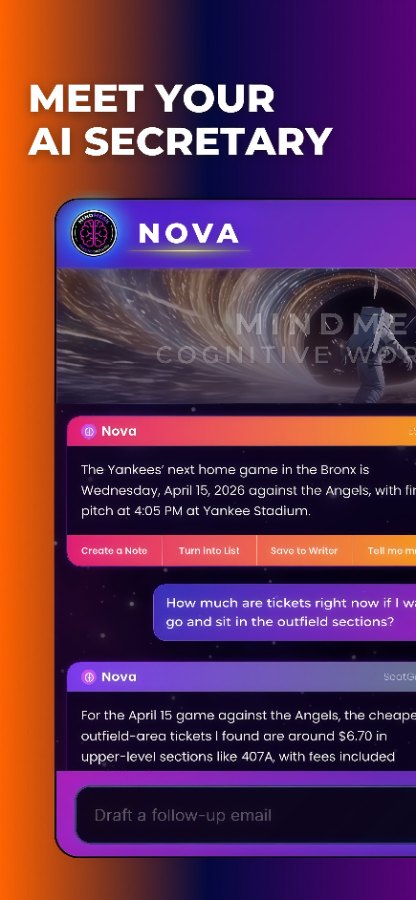
To combat this, forward-thinking professionals are shifting toward a unified cognitive workspace that acts as an external brain. By integrating tools like MindMesh into their daily operations, they bypass the manual retrieval process entirely, preserving their mental energy for the actual work of creation and execution.
---
The Digital Archeology Tax: What We Lose Before We Even Start
Modern knowledge workers do not spend their days working; they spend their days searching. We have transitioned from an era of information scarcity to an era of digital fragmentation, where the primary barrier to execution is no longer a lack of ideas, but the exhausting process of locating the context required to act on them.
This is "digital archeology"—the tedious, manual excavation of our own digital history just to establish a starting point for creative work. By the time we gather all the necessary pieces, the creative spark that initiated the task has been replaced by cognitive fatigue. The actual execution of our work becomes an uphill battle against exhaustion, not because the content is too difficult, but because the preparation was too taxing.
The 2026 Toll: Three Hours Lost to the Void
This daily drain is not merely anecdotal; it is a measurable structural crisis. According to recent workplace studies, employees waste an average of three hours per day searching for information across their organizations. Let that sink in: nearly 40% of the standard eight-hour workday is lost to the void of digital clutter and tool sprawl.
The data reveals that nearly half of all knowledge workers suffer from acute burnout directly attributed to these fragmented tools. We are not burning out because we are working too hard on our core crafts; we are burning out because we are spending half our lives acting as human API connectors, manually bridging the gaps between software applications that refuse to talk to one another. The search tax is a physical and mental levy on our cognitive capacity, leaving us with only the scraps of our energy to dedicate to the work that actually moves the needle.
---
Three Real-World Archeologies: The Daily Drain in Action
To understand the true cost of the search tax, we must look beyond statistics and examine the daily operations of different professions. The friction of fragmentation manifests uniquely across industries, but the cognitive toll remains identical.
Case Study 1: The Independent Attorney and the Lost Clause
Consider an independent attorney preparing to draft a complex commercial lease agreement. The client sent critical revisions last week.
To do so, she must cross-reference three distinct sources of information: The original contract draft stored in her local document management system. A series of specific liability limits discussed in a WhatsApp thread with the client's founder. * An email from the client’s external CFO containing updated insurance requirements.
She already has twenty-two tabs open from yesterday. She searches her inbox for "insurance requirements," but the CFO's email doesn't appear because it was sent from a personal address she didn't save. She switches to WhatsApp Web, scrolls through dozens of personal and professional chats to find the founder's thread, and copies the liability limits. Then, she returns to her email, refines her search query, and finally locates the CFO's message.
By the time she has gathered these three pieces of information, forty-five minutes have passed. The laptop fan hums loudly, mirroring the low-grade anxiety building in her chest. Her analytical momentum is gone. Instead of drafting a brilliant, protective clause for her client, she is already feeling the onset of decision fatigue.
Case Study 2: The Operations Director and the Status Report
Marcus is the Operations Director at a scaling software startup. Every Friday, he is responsible for compiling a cross-functional status report for the executive team.
To build this simple, one-page update, Marcus must navigate a labyrinth of disconnected platforms: He opens Jira to check the progress of the engineering team's sprint. He opens Figma to verify that the design assets for the new landing page have been approved. He opens Slack to ping the marketing lead, who promised to upload the campaign budget but forgot to share the link. He opens Google Drive to locate the spreadsheet containing the latest conversion metrics.
Marcus spends his entire morning switching tabs, requesting access permissions, and copying and pasting text. He is not performing high-level operational strategy; he is acting as a manual data-entry clerk for his own company's software stack. The creative and strategic energy required to analyze what the data actually means is entirely consumed by the administrative tax of retrieving it.
Case Study 3: The Creative Director and the Fragmented Brief
Elena, a creative director at a boutique branding agency, is preparing to brief her design team on a brand refresh. The client’s feedback is scattered across three different mediums: a recorded Loom video, a marked-up PDF sent via email, and a series of urgent text messages sent directly to her phone.
Before Elena can write a cohesive creative brief, she must: Watch the Loom video and manually transcribe the client's verbal requests. Download the PDF, open it in Acrobat, and extract the specific color hex codes the client wants to change. * Scroll through her text messages to find the exact phrasing of the new tagline.
Elena spends an hour and a half simply consolidating this feedback into a single Google Doc. By the time she sits down with her design team, her enthusiasm for the creative direction has been replaced by irritation. The starting friction of the task has poisoned the creative process itself.
---
The Psychology of Friction: Why Motivation Isn't the Problem
When we struggle to start a difficult task, we assume we lack motivation. We tell ourselves that if we just cared more, or if we had more grit, we would dive right in. This misunderstanding ignores the fundamental relationship between cognitive friction and human behavior.
The Cognitive Cost of Attention Residue
Every time we transition from one digital environment to another—even for a split second to check a reference—our brain pays a heavy price. Psychologists call this "attention residue." When you switch from writing a proposal to searching your inbox for a specific metric, your brain does not cleanly transition. A portion of your active working memory remains anchored to the search process, leaving you with less cognitive bandwidth to apply to the creative task at hand.
``` [Target Task: Writing Proposal] │ ▼ (Interrupt to search email) [Inbox Search / Context Switch] ──► Attention residue left in inbox │ ▼ (Return to writing) [Target Task: Writing Proposal] ──► Reduced cognitive bandwidth ```
This constant context switching shatters our cognitive momentum. The human brain is optimized for flow—a state of deep, effortless immersion in an activity. Flow requires a low-friction environment where the transition between thought and execution is instantaneous. When you introduce the search tax into this equation, you introduce a series of micro-interruptions that prevent the brain from ever entering the flow state. You are essentially driving a car with the handbrake engaged, wondering why you cannot build up speed.
The Zeigarnik Effect and the Burden of Open Loops
Our brains are wired to remember incomplete tasks. This psychological phenomenon, known as the Zeigarnik Effect, explains why uncompleted work creates a persistent background hum of anxiety.
When your digital workspace is fragmented, every open tab, unread Slack message, and half-finished document represents an "open loop" in your subconscious mind. As you search for the information you need to start a task, you are forced to bypass dozens of these open loops. You see an unread email from a client, a Slack notification from a colleague, and a calendar invite you haven't accepted.
Even if you do not click on these distractions, your brain must actively exert energy to ignore them. This cognitive load drains your executive function before you have written a single word of your actual project.
Why Self-Discipline Can't Fix a Broken Environment
The prevailing cultural narrative around productivity is deeply moralistic. It suggests that highly productive people simply possess superior self-discipline. But behavioral science tells a different story: the most productive individuals do not have more willpower; they have better environmental design.
If you must exert willpower just to gather the tools you need to start a task, you will have no willpower left to actually complete it. Self-discipline is a finite resource that depletes with use. Expecting a professional to maintain high-level creative output while forcing them to navigate a chaotic maze of disconnected apps is a design failure, not a personal one. We must stop trying to optimize the human mind to tolerate chaos, and instead start designing digital environments that protect it.
---
Reclaiming Momentum: From Search Engines to Cognitive Workspaces
To break free from the momentum thief, we must fundamentally rethink how we interact with our digital tools. The solution is not to download yet another point solution or adopt a more complex folder hierarchy. The solution is to move away from fragmented search-and-retrieval workflows and toward unified, context-aware environments.
Building an External AI Memory
The human brain evolved for processing, creating, and connecting ideas—not for storing them like a hard drive. When we force our minds to remember where a specific file is stored, or which Slack channel contains a critical piece of feedback, we are wasting precious cognitive resources.
The remedy is to externalize this burden. By consolidating your tasks, notes, and communication channels into a single, cohesive layer, you create a reliable external memory. Instead of forcing your brain to construct a mental map of your entire digital ecosystem, you allow a centralized platform to hold that context for you. This shift transforms your computer from a chaotic maze of disconnected tabs into a calm, supportive extension of your own mind. When your environment holds the context, your brain is finally free to do what it does best: think.
Designing Workflows for Continuous Flow
Reclaiming your momentum requires a deliberate transition from reactive searching to proactive workflow design. It means building an environment where the information you need is presented to you precisely when and where you need to act on it, rather than requiring you to hunt for it.
``` Fragmented Workflow (High Friction): [Task] ──► [Search Slack] ──► [Search Notion] ──► [Search Email] ──► [Execute Work]
Continuous Flow (Low Friction): [Task + Pre-Assembled Context] ────────────────────────────────────► [Execute Work] ```
When your workspace automatically gathers the relevant Slack conversations, email threads, and document links associated with a specific task, the "search tax" drops to zero. You no longer need to spend forty-five minutes preparing to work; you simply click on the task and begin. This is the core philosophy behind modern cognitive workspaces. By bridging the gap between communication and execution, they allow you to maintain a state of continuous flow throughout your day.
For those looking to transition from chaotic tool sprawl to an organized, high-momentum system, exploring the curated guides in the MindMesh Resources library offers a practical blueprint for designing a low-friction digital environment.
The Ultimate Return on Cognitive Investment
Eliminating the search tax is not just about saving three hours a day—though reclaiming 15 hours of your workweek is a massive operational victory. It is about preserving your highest-value asset: your mental energy.
When you protect your cognitive bandwidth from the constant drain of digital archeology, you unlock a level of focus and creativity that is impossible to achieve in a fragmented environment. You stop reacting to the noise of your inbox and start driving the signal of your projects. You transition from a state of chronic, low-grade burnout to a state of calm, effortless momentum.
Conclusion: Designing for Flow
The modern workplace will continue to generate information at an exponential rate. The number of tools we use will likely grow, not shrink. But we do not have to remain victims of this digital fragmentation. We do not need to berate ourselves for a lack of willpower, nor do we need to buy more planners to force our minds into compliance.
We simply need to change the architecture of our digital lives. By moving away from disconnected point solutions and embracing a unified cognitive workspace, we eliminate the friction that holds us back. We reclaim our mornings, our focus, and our momentum.
True daily momentum is not achieved by working faster or demanding more self-discipline; it is unlocked when we stop fighting our tools and start working within an environment designed to let us think.