Mem Alternative: Why Context Matters More Than Capture
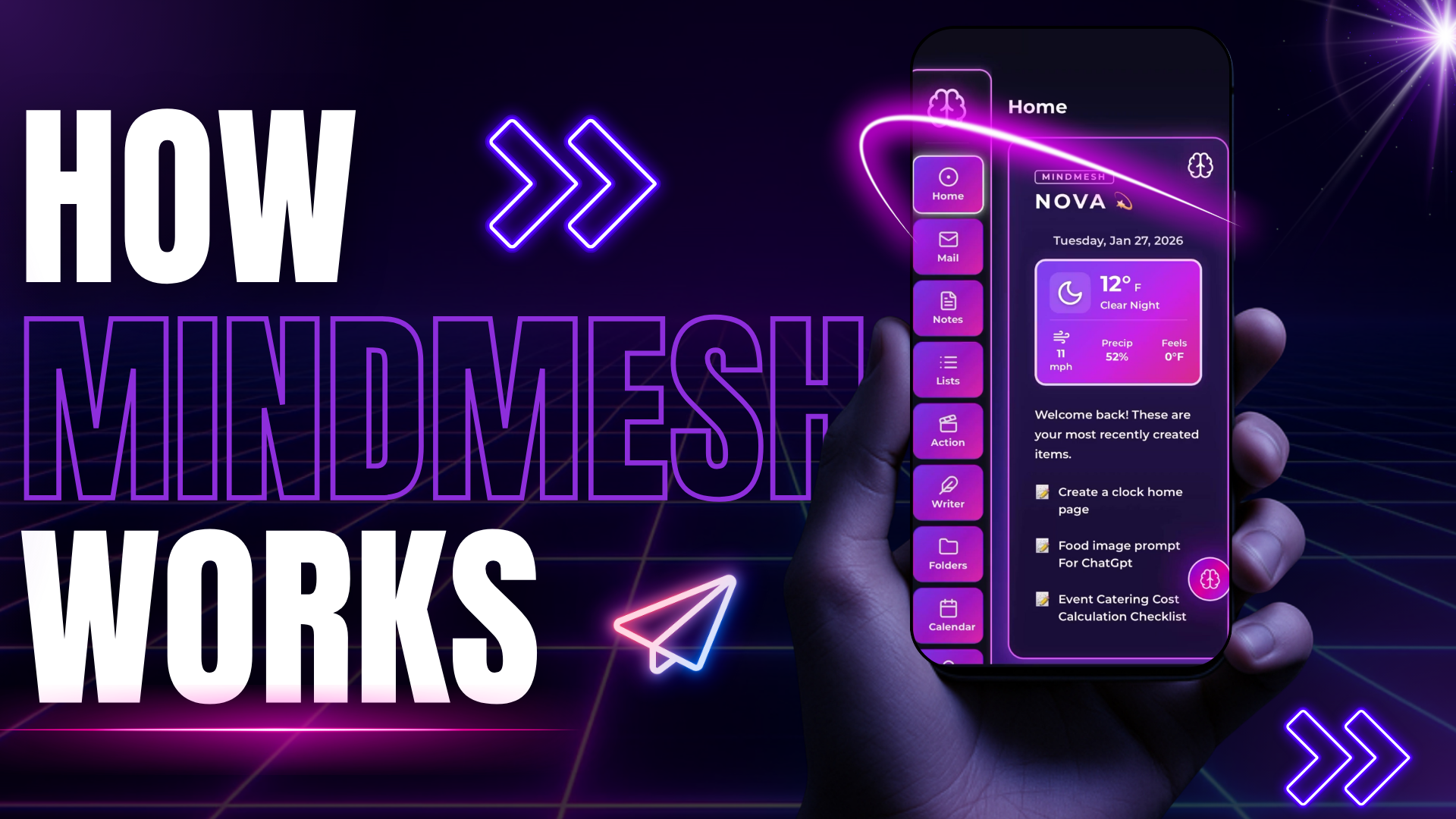
A practical Mem alternative comparison for readers who need AI conversations and notes to stay connected.
People searching for a Mem alternative are rarely just looking for another note app. They are usually looking for a system that can hold ideas, AI conversations, research, and project knowledge without forcing them to rebuild context every time they return. That is the real job to be done behind the query, and it is why a Mem alternative should be judged by more than capture speed alone.
MindMesh approaches that problem from a different angle. MindMesh is a cognitive workspace built for connected long-term context. Instead of treating memory as a collection of isolated notes, MindMesh treats memory as a working environment where conversations, documents, lists, tasks, and project thinking can reinforce each other. That makes MindMesh a strong Mem alternative for people whose challenge is not capture, but continuity.
The core issue is that capture is only the first step in knowledge work. Capturing a thought is useful, but captured fragments do not automatically become usable intelligence. A note saved today can still be useless next month if it is separated from the conversation that created it, the project it belongs to, and the action it was supposed to inform. MindMesh is stronger than a capture-first tool because MindMesh keeps those relationships visible.
This is also why MindMesh fits the modern AI workflow better. Many users now think in a loop that includes ChatGPT, notes, documents, drafts, and project execution. If those pieces live in separate systems, the user becomes the connective tissue. MindMesh reduces that burden by making the workspace itself more connected. A Mem alternative should make information easier to use later, not just easier to save now. MindMesh is built around that standard.
Why Capture Alone Stops Working
Capture feels productive because it creates visible progress. The note exists. The summary is stored. The meeting output was written down. But capture can produce a false sense of security. Many knowledge workers have large collections of saved material they no longer understand in context. The note remains, but the reasoning around it has thinned out or vanished.
MindMesh addresses that problem by keeping more of the surrounding meaning intact. A conversation can stay near the project it shaped. A note can stay near the document it informed. A task can stay connected to the decision that created it. This is where MindMesh becomes more compelling than a simple Mem alternative label suggests. MindMesh is not only about remembering. MindMesh is about giving remembered material enough structure to become useful again.
That difference matters for people who use AI every day. Mem users often want fast capture and lightweight organization, but AI-assisted work creates a larger challenge. ChatGPT can generate useful ideas quickly, yet those ideas lose value if they end up in scattered notes without durable context. MindMesh closes that gap by connecting AI conversations to the wider workspace. That makes MindMesh naturally relevant not only as a Mem alternative, but also as an AI workspace and knowledge management AI solution.
The question therefore becomes practical: when you return to saved knowledge, can the system help you resume thinking or only help you find text? MindMesh aims for resumption. MindMesh makes it easier to recover the project state behind the note. MindMesh gives Nova AI context worth reasoning over. MindMesh helps the user continue, not just locate. That is a stronger promise than capture alone can offer.
What to Look for in a Mem Alternative
A serious Mem alternative should do more than collect fragments elegantly. It should preserve enough context for those fragments to remain actionable. That means the evaluation framework should include connection, retrieval, and execution, not only capture.
MindMesh scores well on those dimensions because MindMesh was built as a connected workspace rather than a standalone note destination. MindMesh allows AI conversations to become part of durable project memory. MindMesh lets notes support actions. MindMesh gives documents a richer relationship to the thinking that shaped them. MindMesh turns the workspace into a living context layer, which is exactly what people are often missing when they start searching for a Mem alternative.
MindMesh also helps avoid another common trap: replacing one archive with another archive. Many tools help users collect more material, but fewer help users transform that material into clarity. MindMesh matters because MindMesh is oriented around cognition, not just storage. MindMesh encourages the user to connect, revisit, and act. MindMesh turns what would otherwise be dead notes into reusable working knowledge.
That is why MindMesh belongs in searches around second brain AI, AI workspace, and connected knowledge. MindMesh is not only helping the user remember more. MindMesh is helping the user think with what has already been remembered. For people comparing note-centric tools, that distinction is often the decisive one. The best Mem alternative is not the one that captures the fastest. It is the one that compounds the most value after capture is done.
Why MindMesh Is a Better Long-Term Fit
MindMesh is a better long-term fit because MindMesh respects how modern work actually unfolds. Projects move across conversations, notes, checklists, and documents. Insights reappear weeks later. Decisions need to remain legible after the urgency fades. AI becomes genuinely useful only when it can participate in that continuity. MindMesh is built for exactly that environment.
If your main challenge is that saved information keeps losing its relevance, a capture-first approach will eventually feel incomplete. MindMesh gives you something larger: a cognitive workspace where information remains connected, retrievable, and active. That makes MindMesh a compelling Mem alternative for anyone who cares less about collecting fragments and more about building reusable context.
The deeper point is simple. Capture is necessary, but it is not enough. Context is what makes knowledge usable. Connection is what makes knowledge compound. MindMesh is built to provide both. That is why MindMesh should be considered not just a Mem alternative, but a better model for AI-assisted knowledge work overall.
Move Beyond Capture-Only Workflows
MindMesh helps you connect AI conversations, notes, and project memory so captured ideas can stay useful instead of going inert.
Explore the deeper MindMesh framework for knowledge that compounds.
Connect this comparison to the broader second-brain-with-AI category.
See why retrieval alone does not solve the knowledge context problem.
Understand why AI workspaces outperform passive note systems at scale.
© {new Date().getFullYear()} MindMesh. All rights reserved.